
El Convenio Internacional del Aceite de Oliva de 1986 reserva la denominación de "Aceite de oliva" únicamente al aceite procedente del fruto del olivo, con exclusión de los obtenidos por disolventes, por procedimientos de reesterificación y de mezcla con aceites de otra naturaleza. No es aplicable tampoco a los aceites de orujo de aceituna
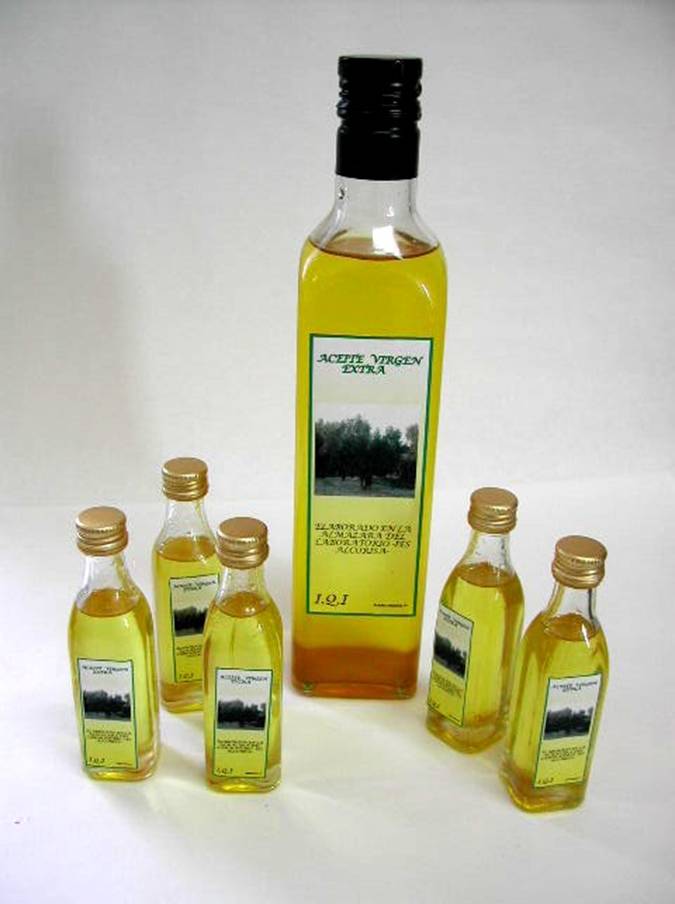
Aceite de oliva del Bajo Aragón. Aceite de oliva español de gran calidad
Dentro de los aceites de oliva se pueden distinguir:
-Aceite de Oliva Virgen: Es el aceite obtenido exclusivamente por procedimientos mecánicos ó por otros medios físicos, que no produzcan la alteración del aceite. El aceite virgen extra no ha tenido más tratamiento que el lavado, la decantación, la centrifugación y el filtrado. Es un producto natural que conserva el sabor, los aromas y las vitaminas de la fruta. Tiene la personalidad de la zona de donde procede. A su vez se clasifican en:
- Extra: de gusto absolutamente irreprochable y con acidez (expresada en ácido oleico), no superior a un grado. Los dos parámetros, por los cuales, podemos distinguir entre los distintos aceites de oliva virgen extra, son la acidez , es decir, el nivel de deterioro que ha sufrido el aceite. El otro parámetro es su puntuación organoléptica, es decir, el grado de apetitosidad que el consumidor percibe al ingerir el aceite de oliva
El aceite de oliva virgen extra, no puede contener ninguna propiedad negativa, y debe poseer las máximas de positivas. Este aceite, nos debe recordar por su olor y sabor a la aceituna fresca, recogida en su momento optimo de recolección. El sabor amargo y el picante también son considerados como propiedades positivas.
- Virgen: de gusto irreprochable y con acidez no superior a 2º. (También recibe el nombre de fino en las fases de producción y comercio mayorista). Se diferencia por el aceite de oliva virgen extra sobre todo en el olor y el sabor.
El aceite de oliva virgen, entre los defectos más frecuentes con los que se encuentra son el avinado, el agrio y el ácido, además del sabor metálico, a moho -humedad y a tierra.
- Corriente: de buen gusto y con acidez no superior a 3,3º. Este tipo de denominación casi no se utiliza.
- Lampante: de gusto defectuoso o cuya acidez sea superior a 3,3º. este tipo de aceite debe de ser refinado para su consumo directo, debido a su elevado índice de acidez
-Aceite de Oliva Refinado: Es obtenido por refinación de aceites de oliva vírgenes y con acidez no superior a 0,5º, mediante técnicas de refinado que no producen alteración en la estructura glicerídica inicial. (Habitualmente se utiliza aceite de Oliva virgen lampante reduciendo la acidez por medio de refino, así como neutralizando el sabor)
-Aceite de Oliva: Mezcla de aceites de oliva vírgenes distintos al lampante y de oliva refinado, con acidez no superior a 1,5º. (Este es el producto más consumido en España).
De la oliva, también obtenemos el aceite de orujo, este aceite no esta dentro de la denominación aceite de oliva, ya que no se elabora con la oliva propiamente dicha, sino que se elabora con el orujo que se extrae con la aceituna. Dentro de la clasificación de aceite de orujo, encontramos:
-Aceite de Orujo Crudo: es el obtenido por medio de disolventes a partir de orujo, un subproducto de la aceituna, con exclusión de los aceites obtenidos por procedimientos de reesterificación y toda mezcla de aceites de otras naturalezas.
-Aceite de Orujo refinado: es el obtenido por refinación de este aceite de orujo crudo y con acidez no superior a 0,5º.
- Aceite de Orujo de oliva: Mezcla de aceite de orujo refinado y de aceite de oliva vírgenes distintos al lampante, con acidez no superior a 1,5º.
Del Reglamento de la Comunidad Económica Europea nº 2568/91 de la Comisión, del 11 de julio de 1991, relativo a las características de los aceites de oliva y de los aceites de orujo, extraemos las más importantes relacionadas con la calidad de los aceites, lo que nos pueden servir para clasificarlos mejor.
|
CATEGORÍA |
Acidez |
Indice de |
Colesterol |
|
Aceite de oliva |
M 1,0 |
M 20 |
M 0,5 |
|
Aceite de oliva |
M 2,0 |
M 20 |
M 0,5 |
|
Aceite de oliva |
M 3,3 |
M 20 |
M 0,5 |
|
Aceite de oliva |
> 3,3 |
> 20 |
M 0,5 |
|
Aceite de oliva refinado |
M 0,5 |
M 10 |
M 0,5 |
|
Aceite de oliva |
M 1,5 |
M 15 |
M 0,5 |
|
Aceite de orujo de oliva crudo |
m 2,0 |
-- |
M 0,5 |
|
Aceite de orujo de oliva refinado |
M 0,5 |
M 10 |
M 0,5 |
|
Aceite de orujo de oliva |
M 1,5 |
M 15 |
M 0,5 |
M = máximo, m = mínimo