
Antiguamente, la mayoría de las familias cuidaban pequeños huertos y criaban animales como forma tradicional de alimentación, esto permitía a las familias ahorrar para otras necesidades. Lo más habitual es que cada casa era tener gallinas que daban carne y huevos, comprase un lechón al que criaba durante todo el año con sobras de la comida y lo que le cocían de la recolección del campo, patatas, verduras, etcétera. Se sacrificaba justo antes del invierno, el mayor problema que existía entonces era la forma de conservar la carne del cerdo para poder consumirla durante el resto del año sin que se estropease, y la solución a este problema apareció con la salazón y curado de la carne. En un principio se curaba el cerdo entero, pero poco a poco se fueron utilizando otras conservas que hicieron que la salazón quedase como algo exclusivo para la elaboración del jamón serrano llegando a convertirse en uno de los manjares más apreciados; entre los jamones serranos destacan los elaborados en la provincia de Teruel que obtuvieron una de las primeras Denominaciones de Origen, principal indicativo de su calidad excepcional.
Las técnicas de elaboración del jamón serrano se han visto modificadas en la actualidad con la incorporación de máquinas y aparatos que controlan la temperatura, la ventilación, la oxigenación y todo el proceso de curación del jamón serrano; por lo que el proceso a pasado de ser una elaboración tradicional del jamón serrano en casa, a una elaboración industrial del jamón serrano en grandes cantidades. Pero en los pueblos pequeños de Teruel aún esta extendido la matacía del cerdo, no es difícil encontrar, hoy en día, algún hogar en el que se continúen realizando las etapas básicas tradicionales para elaborar el jamón serrano y los embutidos tradicionales como chorizo o longaniza; sin embargo si se desea intentar el proceso de curación del jamón serrano en casa le proponemos la receta utilizada durante generaciones en la provincia de Teruel, cuna de uno de los mejores jamones serranos a nivel mundial.
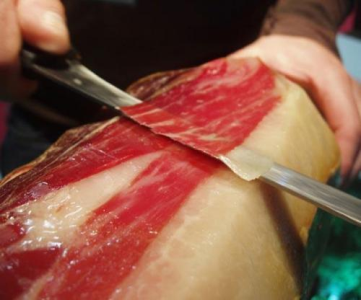
Los jamones que se hacen en los pueblos de Teruel, tienen una receta tradicional en su preparación y secado.
El proceso de elaboración del jamón serrano de Teruel en casa comienza por adquirir una pieza de jamón fresco de un cerdo de buena calidad como son los cerdos criados en Teruel; al adquirirlo solicite que le preparen la pieza para elaborar jamón serrano en su casa, de esta forma se lo prepararán cortando el jamón con una forma redondeada a una altura aproximada de 5 cm. por debajo del hueso de la pata y le eliminarán los elementos sobrantes como es el exceso de grasa, y como son los cartílagos, nervios y venas que se encuentren cerca del hueso. El peso de la pieza sería recomendable que se encontrase a partir de unos 9 kilos en fresco, ya que una vez curado el jamón se habrá producido una merma de un 35 % aproximadamente.
Una vez en casa, lo más importante es sacar la sangre de las venas al jamón, sobre todo de aquellas venas que se encuentran junto al hueso, para evitar que el jamón se pudra; el método empleado para ello es presionando con los dedos fuertemente sobre el jamón con un paño de algodón y haciendo hincapié sobre todo en la zona que sale de la parte central hacia la punta del jamón. A medida que se van extrayendo los restos de sangre, se va secando la pieza con ayuda del trapo limpio o papel de cocina; entonces se debe salar el jamón aplicando sal gorda y frotando enérgicamente por todas las zonas del hueso y donde se vea carne. Solo es necesario untar la sal en la zona de la piel o el cuero si la climatología es adversa y no favorece la curación correcta del jamón serrano, es decir, en localidades con climatología similar a la de Teruel con una temperatura y una altitud sobre el nivel del mar adecuadas basta con aplicar la sal en la zona de la carne de la pata de jamón y el hueso.
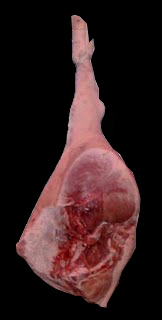
El clima de Teruel y la calidad de sus cerdos hacen del jamón serrano de Teruel uno de los mejores del mundo
A continuación, debe colocarse la pieza de jamón boca abajo en una superficie dura y sobre la piel del jamón se pondrá una tabla de madera, en la que se colocará un peso de unos 15 o 20 kilos y en este estado se deja reposar el jamón entre 2 y 3 días a una temperatura de 12 ºC a 15 ºC; sería interesante que durante esta fase de reposo en casa se cubra el jamón con un paño limpio de algodón con el fin de asegurarnos que esté protegido de cualquier insecto. Esta etapa es importante, puesto que la sal como un conservante natural hace que la carne de la pata de jamón mantenga sus propiedades y no se estropee, además colabora al desangrado de la pieza ejerciendo a su vez un secado, por ello es necesario el vigilado de la pieza. Transcurrido este tiempo se vuelve a presionar el jamón con los dedos fuertemente para terminar de sacar cualquier resto de sangre, si en la primera ocasión se ha hecho correctamente no tiene que salir mucha cantidad; después se vuelve a secar bien el jamón y se vuelve a añadir sal gorda, pero en esta ocasión cubriendo completamente la pata de jamón con ella, también debe colocarse de nuevo la tabla sobre la pieza con el peso y dejar reposar la pieza. Si dejamos reposar el jamón a una temperatura de 13 ºC o 14 ºC el tiempo de reposo serán 14 días; sin embargo, si la temperatura es inferior debe ampliarse el tiempo de reposo siendo entre 16 y 20 días; lo único que ha de tenerse en cuenta es que transcurridos la mitad de los días dar la vuelta al jamón y que se coloque la pieza con la carne hacia arriba.
Terminado este tiempo de salazón se eliminará la sal de la pieza con un cepillo; a diferencia del proceso industrial es preferible retirar la sal mediante un cepillado y no mediante un lavado, porque el agua al retirar el conservante natural que es la sal puede hacer que se estropee la carne, incluso antiguamente en Teruel bastaba con dar unos golpes secos que dejaban caer el exceso de sal. La última fase que se realizaba en la mayoría de los pueblos de Teruel antes del secado, y se emplea actualmente en la elaboración casera del jamón serrano, consiste en que se debe cubrir la zona de la carne y el hueso del jamón con una capa de pimentón, la cual en el proceso industrial de curación vendría a sustituir la sal aplicada en la fase de pro-salado. Para cubrir la pata de jamón con el pimentón se recomienda utilizar un colador o un tamiz con el que este condimento, mediante pequeños golpecitos, se irá espolvoreando de manera uniforme; esta especia se emplea para el jamón serrano que se elabora en casa para así mantener la carne exterior en buen estado y evitar que enmohezca y se estropeé, sin embargo no hay que preocuparse por el sabor, ya que el pimentón no produce ninguna alteración en el sabor del jamón serrano una vez curado.
Llegado el momento de colgar el jamón para su secado, basta con rodear la pata de jamón con un cordón o tira de plástico duro, lo suficientemente fuerte para que aguante el peso de la pieza de jamón durante el tiempo que dure la curación; el jamón debe permanecer durante un mínimo de 5 o 6 meses en una zona fresca, bien aireada, con una humedad de entre un 65% y un 76% , en la que la ventilación sea constantemente y a su vez esté resguardada de la presencia de insectos (normalmente solía ser una bodega, los graneros o alguna habitación fresca de la casa). En Teruel existe una climatología más bien seca y una humedad relativa del ambiente más bien baja, ambos factores hacen que junto con la situación geográfica de muchas localidades (a partir de unos 800 metros sobre el nivel del mar) se den unas condiciones perfectas para la curación del jamón serrano, que son las que le dan su gran aroma y sabor. Esto se ha de tener muy en cuenta a la hora de curar un jamón en casa, puesto que es en estos meses cuando el jamón serrano adquiere sus propiedades organolépticas que nos harán disfrutar junto a nuestros invitados de este exquisito manjar. La mejor época para elaborar el jamón es a finales de otoño y su maduración optima se alcanza aproximadamente transcurrido diez meses de curación y maduración.

Jamón serrano elaborado en casa según una receta tradicional
Hasta hace muy pocos años, el jamón serrano se elaboraba y curaba en casa junto con otros muchos productos derivados de la matanza que se realizaba en invierno; antiguamente, esta matanza era una fiesta porque se consumían muchos de los ansiados productos del cerdo, entre los cuales los más valorados eran los jamones, que en las familias más humildes se utilizaban como pago dejando para su consumo los chorizos y otros productos que podían conservarse en adobo. La elaboración artesanal de los jamones en casa no siempre está reñida con las nuevas tecnologías, puesto que en algunos casos se dedica un cuidado personalizado a cada pata de jamón en cada una de las etapas de elaboración. El resultado final de la elaboración del jamón en casa es muy diferente al industrial porque las piezas de jamón se salan y masajean por separado con una dedicación exclusiva y aplicando la cantidad justa a cada pata de jamón según su peso.