
El jabón es un producto muy antiguo, tanto como la necesidad del hombre por asearse. Los jabones no sólo tenían fines higiénicos, sino que también se concebían como ungüentos dedicados a paliar dolores o relajar el cuerpo. Es cierto, que lo que hoy consideramos como jabón, dista bastante del jabón que se empleó en la antigüedad o en épocas más recientes como la Edad Media o Moderna. El objetivo del producto era el mismo: eliminar la suciedad de los tejidos y la piel; sin embargo, su composición ha variado.
Los jabones naturales artesanos están compuestos de grasas animales o aceites como el de oliva, mezclados con una sustancia alcalina como por ejemplo la sosa. Sin embargo, los jabones y detergentes actuales contienen sustancias químicas sintéticas cuyo objetivo es producir gran cantidad de espuma, ya que en la actualidad parece relacionarse espuma con limpieza, una creencia que es errónea.

El aceite de oliva virgen es perfecto para la fabricación de jabones caseros
El origen del nombre “jabón” es muy posterior al origen del producto en sí. La tradición mitológica romana relaciona el origen del nombre con el monte Sapo, situado cerca del río Tíber en Roma. El relato cuenta que fue en la ladera de este monte donde se produjo la reacción química de saponificación, es decir, se unió el agua procedente de las lluvias, con las cenizas y las grasas procedentes de sacrificios rituales de animales, dando origen al jabón.
Existe otra costumbre que afirma que el origen del nombre procede de la ciudad de Savona, situada cerca de Génova en Italia, donde se elaboró el primer jabón sólido. Destaca el parecido etimológico entre el nombre de la ciudad y la denominación francesa de jabón “savon” e italiana “sapone”
No se puede fijar con seguridad cual fue el origen del jabón, sin embargo, sí que pueden rastrearse sus orígenes. La primera fuente testimonial que hace referencia a un producto similar al jabón data del III milenio antes de nuestra Era, en la antigua Mesopotamia, tierra que fue origen de las grandes civilizaciones de la humanidad. Concretamente en la región de Sumer aparecieron unas tablillas de arcilla que mencionan la mezcla consistente en hervir aceites con álcalis, potasio, soda, resinas y sal. Esta mezcla era empleada principalmente para tratar las fibras textiles como la lana y la piel.
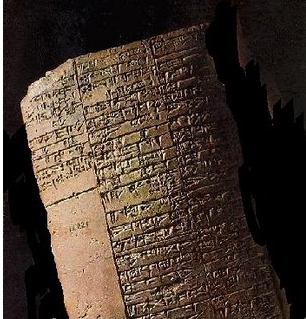
Tablilla de arcilla similar a la localizada en Mesopotamia que hace referencia al jabón realizado con soda, aceite y otros elementos.
También del Antiguo Egipto proceden testimonios referidos a sustancias jabonosas o detergentes; para realizarlos, ellos empleaban la tierra de batán, el natrón y los altramuces machacados. Sí que aparecen menciones a mezclas que efectuaban con aceites y grasas pero el objetivo de estos ungüentos era más bien medicinal. Del mismo modo en Fenicia en el siglo VII a. C. se testimonia el uso del jabón, sobre todo para limpiar los tejidos de algodón y lana.
Al igual que el resto de sociedades antiguas, la civilización clásica también empleó el jabón. Así lo permite atestiguar el descubrimiento de unos restos arqueológicos hallados en la ciudad romana de Pompeya y que han sido interpretados como una fábrica de jabón, datan del II milenio a. C. El testimonio de Plinio el Viejo, autor del siglo I d. C. da fe del empleo del jabón al hablar en uno de sus textos sobre los diferentes tipos de jabones que las mujeres empleaban para tratar sus cabellos. Este autor afirmó que fueron los galos quienes en el siglo IV a. C. inventaron el jabón. Consistía en un fluido espumoso obtenido hirviendo aceites con el agua procedente del lavado de cenizas. Otro autor clásico que nombra el jabón en sus textos es Galeno, del siglo II d. C. Éste autor lo identifica como un producto empleado para el lavado de las prendas y la higiene personal. A pesar de estas menciones, los griegos y romanos más que jabón, solían emplear aceite de oliva para su aseo personal. Ellos embadurnaban su cuerpo con aceite de oliva y arena y después procedían a retirar la mezcla junto con la suciedad mediante un raspador denominado “strigil”.
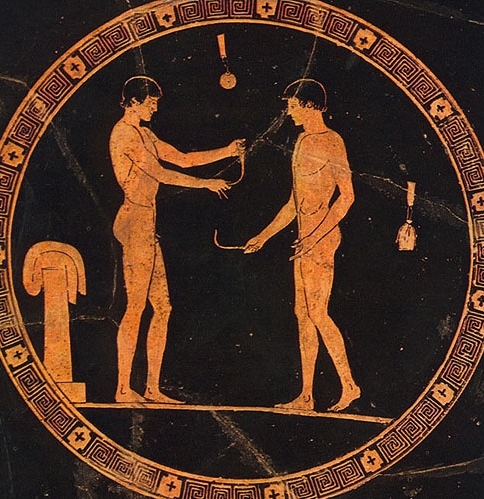
Uso del "strigil" acompañado de la mezcla de aceite de oliva y arena. Vaso ateniense de figuras rojas (460 a. C.)
Con la caía del Imperio Romano y las invasiones bárbaras el uso del jabón en Europa entró en decadencia. Sin embargo, el mundo musulmán continuó investigando en el terreno y fueron los primeros en introducir la cal a las cenizas de la lejía, de hecho, la palabra álcali deriva del árabe “al-qali”, cuyo significado es ceniza.
A partir de los siglos VIII – IX en toda la cuenca del Mediterráneo, y más centrado en las regiones de Marsella, Génova, Sabona y Venecia comenzó a florecer la industria jabonera. Durante el siglo XV los jabones elaborados a partir del aceite de oliva entraron en auge, extendiéndose por toda Europa y convirtiéndose en los mejores para el cuidado corporal. Estos jabones fueron los precursores de los jabones actuales.
ELABORACIÓN DEL JABÓN ARTESANAL
Para la elaboración del jabón se han empleado múltiples y variados procedimientos. En esta ocasión vamos a examinar el proceso artesanal de elaboración a partir de dos recetas de jabones que utilizan como ingrediente el aceite de oliva usado. Cuando empleamos el aceite de oliva virgen para cocinar durante varias veces pierde sus propiedades y queda deteriorado. Ante esta situación podemos optar por deshacernos de él o reciclarlo. Tradicionalmente las mujeres rurales del siglo XIX y XX empleaban para blanquear la ropa un jabón fabricado a base de aceite de oliva virgen usado con agua caliente y ceniza de los hogares.
El proceso de elaboración de jabón es muy sencillo, además da gran resultado ofreciendo un jabón cremosos y eficaz. Antes de comenzar es necesario tener en cuenta el uso de guantes de goma para que las manos no entren en contacto con la sosa y nunca deben emplearse recipientes de aluminio o estaño para evitar que expulsen exhalaciones nocivas.

El aceite de oliva virgen es uno de los tres ingredientes clave para elaborar jabón casero
Receta de Jabón Tradicional
Para elaborar esta receta es necesario proveerse de 3 litros de agua, ½ kilo de sosa caústica y 3 litros de aceite virgen usado. El primer paso es mezclar en el recipiente a fuego caliente la sosa con el agua y remover siempre en el mismo sentido hasta que se disuelva. A continuación se añade el aceite de oliva poco a poco hasta que la mezcla cuaje. Es en este momento, cuando se le pueden añadir elementos como blanqueante para que el color del jabón sea más blanco, o esencias de hierbas o frutas para que adquiera olor agradable. A medida que la mezcla se vaya enfriando, irá adquiriendo un aspecto y tacto sólido. El jabón debe echarse en un recipiente de madera o plástico y esperar a que quede sólido del todo en un par de días. Es entonces cuando podrá cortarse en trozos quedando listo para ser usado.
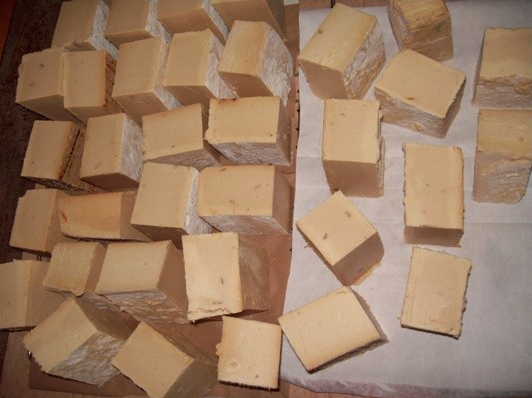
Jabones artesanos troceado elaborado a partir de aceite de oliva virgen extra utilizado
Receta de Jabón Líquido
La receta de este jabón casero es muy similar a la anterior, sin embargo, ésta es de jabón líquido que puede emplearse directamente en la cajetilla de la lavadora. Los ingredientes son 8 litros de agua, ¼ de kilo de sosa, una botella de limpiador a mano “Gior”, 2 litros de suavizante y 2 litros de aceite de oliva usado. El procedimiento consiste en disolver todos los ingredientes en un recipiente grande y dejarlo reposar de 7 a 9 días seguidos durante los cuales es necesario ir dándole vueltas con una herramienta de madera. Al finalizar esos días, cuando la pasta se espese adquiriendo el aspecto y tacto similar al del jabón líquido, ya estará listo. Entonces el jabón puede distribuirse en botellas de suavizante y jabón reutilizadas.
Este tipo de jabones artesanos a base de aceite de oliva virgen extra queda totalmente disuelto en el agua y no deja restos de residuos. Es ideal tanto para lavar ropa como suelos pues quedan limpios y brillantes como si estuviesen encerados. Además colaboras en la protección del medio ambiente al ser un jabón ecológico.

Mujeres lavando la ropa en el río con productos naturales a base de aceite de oliva virgen